BHA Eyes Direct Action as Affordability Checks Threaten Racing's Betting Core
BHA Eyes Direct Action as Affordability Checks Threaten Racing's Betting Core

The Brewing Storm Over Gambler Checks
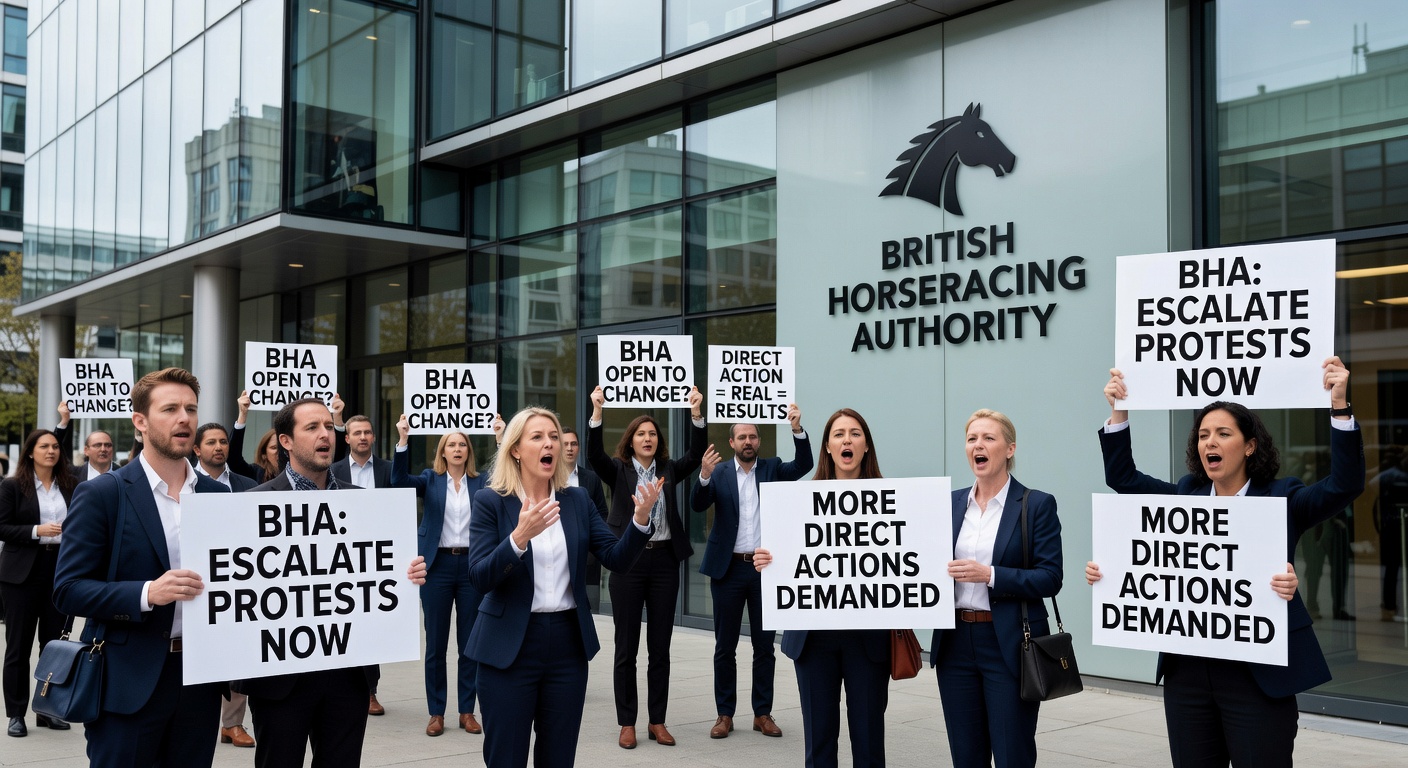
The British Horseracing Authority (BHA) has made clear its readiness to ramp up protests, including more direct actions, against the UK government's proposed affordability checks for gamblers; this stance builds directly on the momentum from past campaigns like the successful ‘Axe the Racing Tax’ drive and a one-day strike last year that successfully halted meetings while blocking a proposed betting tax increase. Reports from The Guardian detail how these checks could force up to 120,000 regular punters—those betting consistently—to submit personal financial documentation, a move that observers note could reshape the landscape for British horseracing, already grappling with a £2 billion drop in betting turnover since 2021.
What's interesting here is the timing; with the Gambling Commission set to deliver its final decision next month, the BHA's signals come at a pivotal moment in April 2026, as industry leaders weigh the risks of inaction against the potential fallout from stricter regulations. And while pilot schemes run by credit agencies have yielded inconsistent results, data indicates these checks might push as many as 44,000 punters toward unlicensed black market operators, further eroding legitimate betting streams that fund racing's operations.
Past Victories Fuel Current Resolve
Those who've followed the sector remember how the ‘Axe the Racing Tax’ campaign galvanized stakeholders, uniting bookmakers, trainers, and fans to derail what could have been a crippling levy hike; that effort, coupled with last year's one-day strike—which saw meetings grind to a halt and sent a stark message to policymakers—demonstrates the power of collective action in this space. Now, experts observe, the BHA draws from those playbooks, positioning itself to escalate if needed, since history shows such moves can sway decisions when betting revenue hangs in the balance.
Take the strike, for instance: it not only paused races across key tracks but also spotlighted racing's economic ties to gambling, where turnover directly supports prize money, infrastructure, and jobs; figures reveal that since 2021, the industry's betting handle has plummeted by £2 billion, a trend that affordability checks could accelerate by introducing barriers for everyday punters who fuel the sport. But here's the thing—successful campaigns like these thrive on visibility, and with the Gambling Commission's ruling looming, the BHA's openness to "more direct actions" suggests strikes or blockades could return, potentially disrupting the spring 2026 fixture list if talks falter.
Dissecting the Proposed Checks and Their Reach
Under the plans, regular punters—defined by consistent betting patterns—face requirements to provide bank statements, income proofs, or other financial records, a process that could snag 120,000 individuals based on current profiles; researchers point out this threshold targets those whose activity exceeds certain limits, yet the administrative burden risks alienating loyal bettors who view racing as both sport and pastime. Data from industry analyses shows this could drive 44,000 toward offshore or black market sites, where oversight vanishes and consumer protections evaporate, a shift that's already nibbling at legitimate operators' edges.
And the turnover hit? Since 2021, British horseracing has lost £2 billion in bets placed, partly from economic pressures but now threatened further by these checks; observers note that while aimed at curbing problem gambling, pilots by credit agencies produced spotty outcomes—some flagged inaccuracies in assessments, others highlighted delays that frustrated users—raising questions about scalability across millions of transactions. It's noteworthy that these trials, though limited, exposed gaps where low-risk punters got tangled in red tape, potentially chilling casual engagement that keeps tracks buzzing.
Pilot Schemes' Mixed Signals
Credit agencies tasked with early implementations delivered results that varied widely; one scheme flagged inconsistencies in verifying incomes for self-employed bettors, while another showed processing times stretching weeks, deterring repeat business. Studies found these pilots often misclassified moderate punters as high-risk, leading to unnecessary document requests that soured experiences; for racing, where quick, frictionless betting drives attendance and online volume, such hurdles compound the £2 billion turnover slide, as punters seek smoother alternatives elsewhere.
Yet the Gambling Commission presses forward, scheduling its verdict for next month amid calls from the BHA for reconsideration; figures suggest black market migration could siphon not just 44,000 users but also revenue streams critical for racing's £4 billion annual ecosystem, where levy contributions from bookies fund everything from stallion nominations to track upgrades. This is where the rubber meets the road: direct actions could amplify these concerns, echoing last year's strike that forced policy U-turns.
Industry-Wide Ripples and BHA's Strategy
Stakeholders beyond the BHA watch closely, since affordability checks ripple through bookmakers who collect the levy on racing bets; a 44,000-punter exodus to unlicensed realms means lost funds, exacerbating the post-2021 downturn where online and track betting alike have softened. People who've studied this note how past protests—like ‘Axe the Racing Tax’—not only halted tax rises but rebuilt coalitions, with trainers, owners, and even some regulators acknowledging racing's role in rural economies.
Now, in April 2026, the BHA's pivot to "escalating protests" includes hints at venue blockades or extended stoppages, tactics proven effective when the one-day strike last year spotlighted vulnerabilities; with 120,000 punters potentially affected, the math underscores urgency—each document demand risks a defection, piling onto turnover losses that strain prize pots already down amid inflation. And while pilots faltered on consistency, the Commission's next-month call remains the flashpoint, where BHA actions could tip scales.
- Up to 120,000 regular punters required to submit financial docs.
- Potential black market shift for 44,000 users.
- £2bn betting turnover drop since 2021.
- Inconsistent credit agency pilots.
- Gambling Commission decision due next month.
These elements form the BHA's case, drawing from victories that show direct pressure works when economic stakes run high.
Conclusion
As the Gambling Commission approaches its ruling next month, the BHA's preparedness for bolder protests underscores the high stakes for British horseracing, where affordability checks threaten to deepen a £2 billion turnover crisis while risking a black market surge; past triumphs like ‘Axe the Racing Tax’ and the impactful one-day strike provide a roadmap, reminding observers that unified, visible action has swayed policy before. With pilots revealing flaws and 120,000 punters in the crosshairs, the coming weeks will test whether escalation averts what could be lasting damage to the sport's betting lifeline—history suggests the industry's resolve might just hold the line.