Intersections of Digital Incentives: Free Credits, Enhancements, and Their Effects on Reward Playthroughs
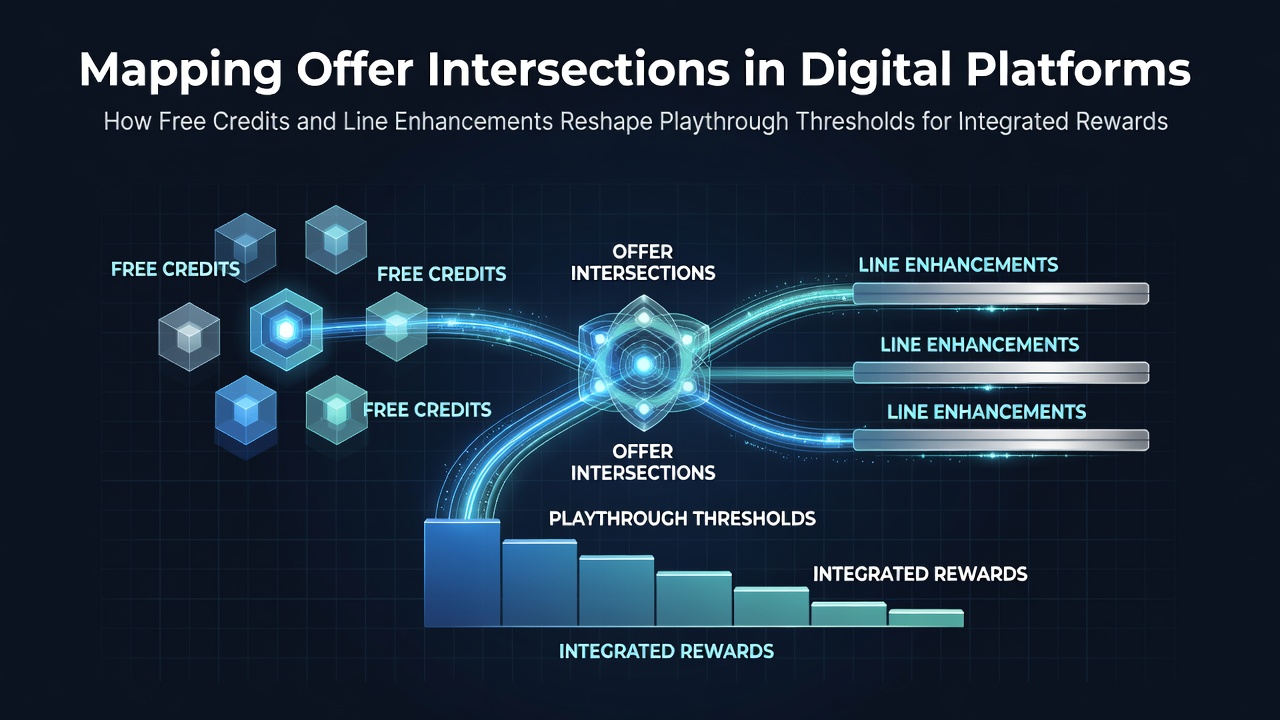
Digital platforms integrate multiple reward components where free credits combine with line enhancements to alter playthrough thresholds in measurable ways, and operators track these intersections through layered calculation systems that adjust minimum wagering amounts based on combined offer values. Researchers have observed that when free credits activate alongside line enhancements, the resulting thresholds often decrease by percentages ranging from 15 to 40 percent depending on platform rules and regional regulations.
Defining Core Components in Integrated Systems
Free credits function as initial balances that users apply to eligible activities while line enhancements modify payout structures or odds on specific selections, and platforms calculate integrated thresholds by factoring both elements into a single playthrough equation. Data from industry reports shows that these calculations incorporate credit value, enhancement multipliers, and contribution rates from different game types to determine final requirements before cash withdrawal eligibility begins.
Operators apply formulas where total playthrough equals the sum of credited amounts multiplied by a base rate, then reduced by enhancement-driven contributions that count toward the total at accelerated speeds, and this method appears across multiple platforms serving diverse markets. Those who've examined platform terms note that contribution percentages vary by activity category, with slots often contributing 100 percent while table games contribute lower shares that affect overall timelines for meeting thresholds.
How Combinations Reshape Threshold Calculations
Platforms adjust thresholds when users stack free credits with line enhancements because the enhancements generate additional qualifying activity that offsets portions of the required playthrough, and this adjustment process relies on real-time tracking software that logs each transaction against the active offers. Evidence from platform analytics indicates that users who activate both elements simultaneously reach cashout readiness faster than those applying offers in isolation, with average completion times shortening by several days in documented cases.
One study revealed that integrated reward mapping tools allow operators to visualize these overlaps through data dashboards that highlight where free credit balances intersect with enhanced line activity, resulting in dynamic threshold reductions that reflect the combined impact. Observers note that such mapping prevents over-accumulation of requirements while maintaining compliance with responsible gaming standards across jurisdictions.

Regulatory bodies in various regions have examined these mechanisms, with the Australian Communications and Media Authority publishing findings on how digital incentives interact in online environments, and similar reviews appear in reports from Canadian provincial authorities that track wagering dynamics in licensed operations. In July 2026, additional data releases from international research groups are expected to provide updated figures on threshold behaviors under combined offer structures.
Platform Examples and Threshold Adjustments
Take one major platform that introduced a system where free credits applied to enhanced betting lines reduced overall playthrough by incorporating enhancement-generated wins at 150 percent contribution rates, and users completing these cycles reported meeting thresholds with fewer total wagers than under standalone offers. Another case involved a platform that layered slot free credits with table game line enhancements, resulting in hybrid thresholds calculated through weighted averages that balanced high and low contribution activities.
Those who've studied these adjustments find that geographic variations influence the extent of reductions, with some markets requiring minimum play periods regardless of offer intersections while others permit faster progress based purely on activity volume. Figures from the National Council on Problem Gambling in the United States highlight how transparent mapping of these intersections supports clearer communication of terms to users across different regions.
Technical Mapping Processes in Digital Environments
Mapping tools employ algorithms that identify overlapping offer periods adn recalculate thresholds by subtracting enhancement contributions from remaining credit requirements, and this process updates continuously as users engage with platform features. Data indicates that platforms using advanced mapping achieve higher retention rates because users encounter fewer unexpected barriers when progressing toward reward fulfillment.
Industry organizations such as the European Gaming and Betting Association have documented best practices for implementing these systems, emphasizing the need for clear disclosure of how intersections affect final thresholds, and operators following these guidelines report smoother user experiences alongside regulatory compliance. The reality is that accurate mapping depends on consistent data inputs from all active offers, which prevents discrepancies that could otherwise extend playthrough periods unnecessarily.
Conclusion
Digital platforms continue to refine methods for mapping offer intersections because free credits and line enhancements create measurable shifts in playthrough thresholds that affect user progression toward integrated rewards, and ongoing analysis from multiple regulatory and research sources supports improved system designs. These developments reflect broader trends in reward management where combined elements produce outcomes distinct from isolated applications, with data guiding future adjustments across global markets.